What is the Euro NCAP Safety Test?
Euro NCAP (European New Car Assessment Program) is an organisation that conducts safety tests on new cars and provides consumers with information about the safety of different models. Euro NCAP was established in 1997 as a collaboration between European governments, motoring associations and consumers. The main aim of Euro NCAP is to improve vehicle safety by encouraging manufacturers to include safety features and technologies in their vehicles.

Euro NCAP safety tests include crash tests and tests that measure the vehicle’s performance in various safety situations. These tests cover various aspects of the vehicle’s safety, including:
Frontal Crash Test: This test simulates a frontal crash to measure how the vehicle protects its occupants.
Side Impact Test: This test measures the protection provided to vehicle occupants in the event of a crash.
Neck Response Test: Tests the effectiveness of seats and head restraints in preventing neck injuries in the event of an accident.
Pedestrian Protection Test: This test examines the impact on pedestrians during a crash and evaluates the design of the front of the vehicle to reduce injuries.
Safety features: Euro NCAP also evaluates the usability and effectiveness of safety features such as electronic safety management, emergency braking and lane departure warning.
After these tests, Euro NCAP gives each vehicle a star rating from 1 to 5. The higher the star rating, the better the car performs in safety tests. When the results are released, they provide consumers with important information so they can make an informed decision about the safety of the vehicles they are considering.
Euro NCAP has contributed to significant improvements in car safety standards over the years as manufacturers seek to achieve higher ratings and meet changing customer needs.
Are Electrical Vehicle Batteries safe?
The batteries for Electric Vehicles are designed with safety as a priority. But with any technology, there are risks. This is how the industry combats the risks for Electric Vehicle Batteries:
- BMS (Battery Management Systems)
- Thermal Management
- Cell Design
- Crash Safety
- Testing and Standards
- Manufacturing Quality Control
- Emergency Response Procedures
- Recycling and Disposal
Will other people hear my Electric Vehicle?
It is now a legal requirement that all new EVs must be fitted with a noise emitter so this should minimise the danger an EV poses to pedestrians.
Fire Response & Rescue Operations for Electric Vehicles
In the rare event of an Electric Vehicle fire, it can be more challenging to extinguish than a traditional vehicle fire due to the nature of lithium-ion battery fires. Fire departments and rescue teams have developed specific protocols to safely handle Electric Vehicle fires.
Are Electric Vehicles safe when being charged?
There is always a degree of risk with any technology involving electricity though incidents involving EVs catching fire or overheating, though it is very rare. Manufacturers implement multiple safety measures to ensure the protection of the vehicle, occupants and the surrounding areas. Public charging points are regularly inspected and serviced to minimise risks to the public.
It is recommended when installing an Electric Vehicle home charging station to use a reputable and professional installer and the station should be regularly inspected and maintained.
Electric Vehicle Crash Safety
Electric Vehicles tend to have a lower centre of gravity than traditional vehicles because the battery packs are usually located at the bottom of the vehicle. This can reduce the risk of rollovers and improve overall stability. Most EVs have received high safety ratings in crash tests.
The safest Electric Vehicles – 5 Stars
Here we will be outlining the current Electric Vehicles on the market which scored the maximum of 5 stars. (As per the Euro NCAP Safety Test).
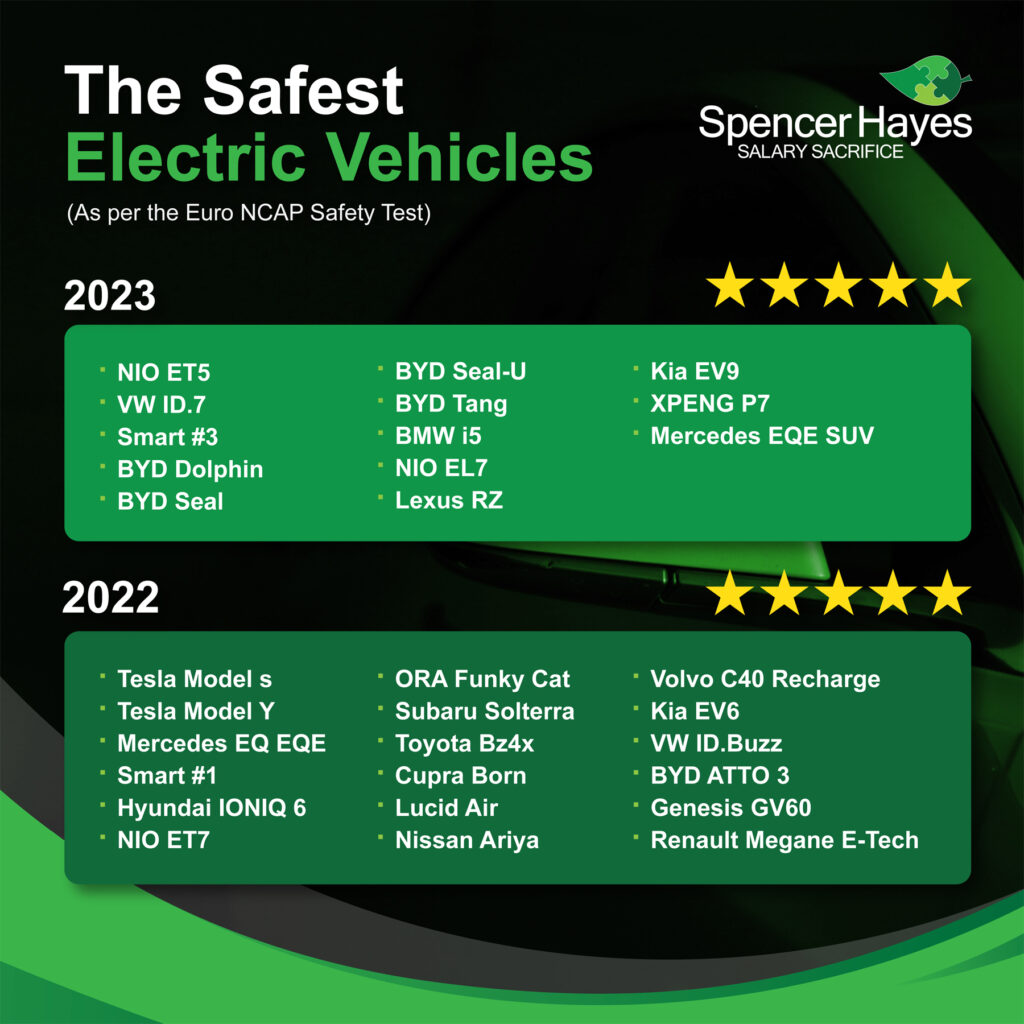
A full list of Euro NCAP Ratings for EVs can be found here: https://www.euroncap.com/en/ratings-rewards/electric-vehicles.
As you’ll see, the Chinese manufacturer BYD (Build Your Dreams) boasts 4 of their models achieving the highest possible rating of 5 stars in 2023, these models join the Atto 3 which was awarded the 5 stars by Euro NCAP in 2022.
Manufacturers are continuously working to improve the safety of EVs, whether it be innovation in battery technology, general vehicle safety, vehicle design etc. As the technology advances new safety features and improvements will be implemented in Electric Vehicles.
Additionally, regulatory bodies update safety standards to address the unique aspects of Electric Vehicle technology, ensuring that EVs remain as safe as possible for consumers.
Interested in learning more about Electric Car Safety?
If so, I am happy to answer any further questions you may have, simply connect with me on LinkedIn, or get in touch via email or phone.